

For most investors, Bitcoin exposure begins with a straightforward strategy: buying BTC and holding it.
That approach sits alongside several other ways to gain exposure to Bitcoin’s growth. Investors can access BTC through spot ETFs, through public companies with Bitcoin treasuries, or through the infrastructure that produces Bitcoin itself — mining.
Each model exposes investors to Bitcoin differently. The distinction affects how returns are generated, how risk accumulates, and what factors ultimately determine performance.
Passive Exposure vs. Operational Exposure
Buying Bitcoin or ETF shares provides direct price exposure. The outcome of the investment tracks BTC’s market value.
Mining operates differently. It is an operational activity that converts electricity and computing power into Bitcoin production. Instead of tracking price directly, mining economics depend on both market conditions and operational efficiency.
The main variables that determine mining profitability are Bitcoin price, network difficulty, total network hashrate, transaction fee levels, electricity costs, and hardware efficiency.
These variables interact continuously. As competition increases or hardware improves, the economics of mining shift.
Asset Exposure vs. Infrastructure Exposure
Holding BTC provides exposure to a digital asset.
Mining provides exposure to the infrastructure that supports the network.
Mining operations rely on:
- ASIC machines optimized for SHA-256 hashing
- electrical distribution capable of supporting high loads
- cooling infrastructure
- networking systems connecting machines to mining pools
- data center facilities housing equipment
This infrastructure determines how efficiently electricity is converted into hashrate.
The Bitcoin network currently operates at approximately 950 EH/s. In short, mining has evolved into a global industrial sector.
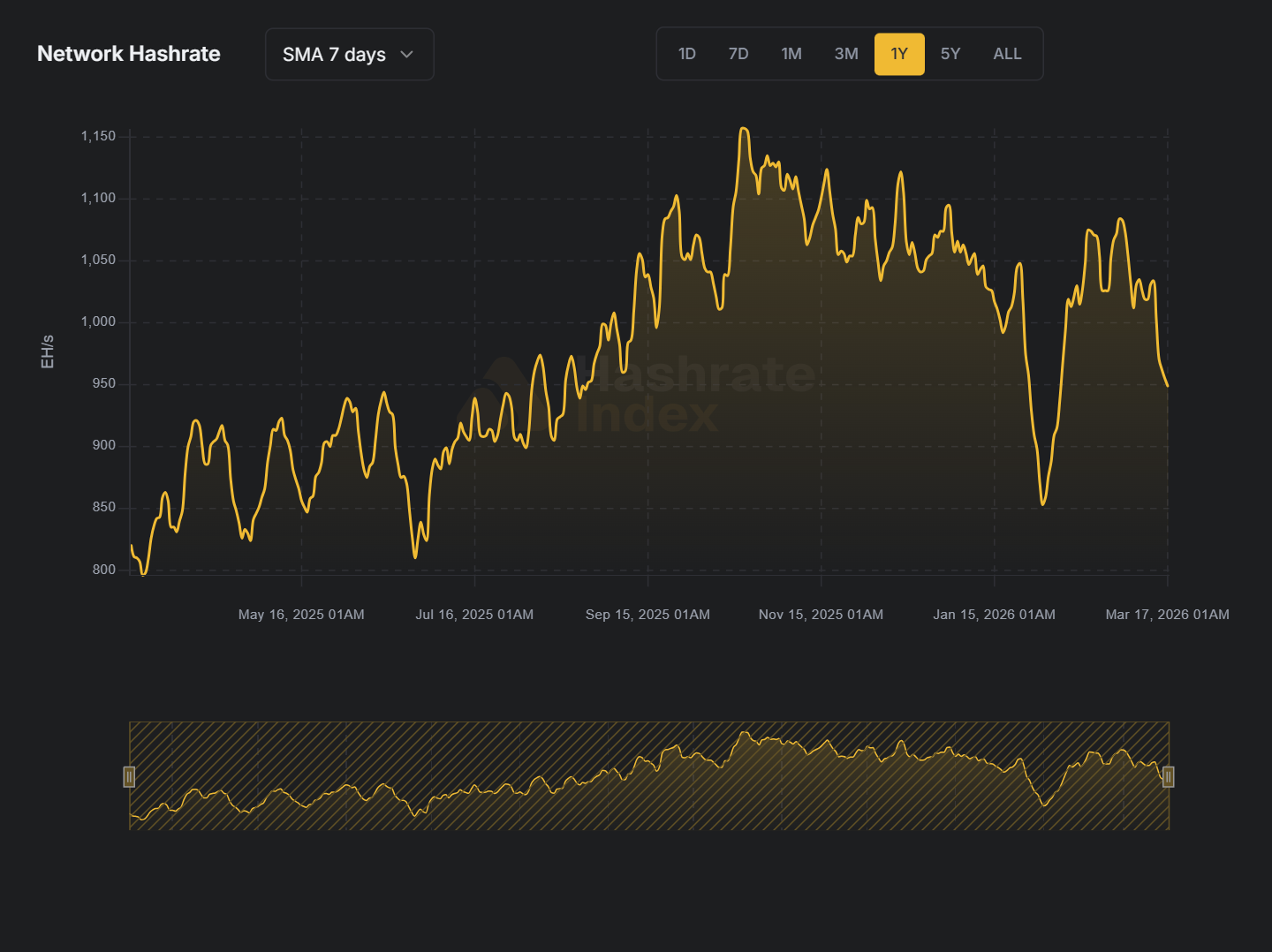
Source: Hashrate Index
How Returns Are Generated
Bitcoin ownership generates returns only through price appreciation.
Mining generates Bitcoin directly through block rewards and transaction fees.
Each successfully mined block produces:
- the block subsidy
- transaction fees included in the block
Following the 2024 halving, the block subsidy is 3.125 BTC per block. Transaction fees fluctuate depending on network demand and have recently contributed anywhere from 0.5-1.5% of miner revenue, depending on congestion periods.
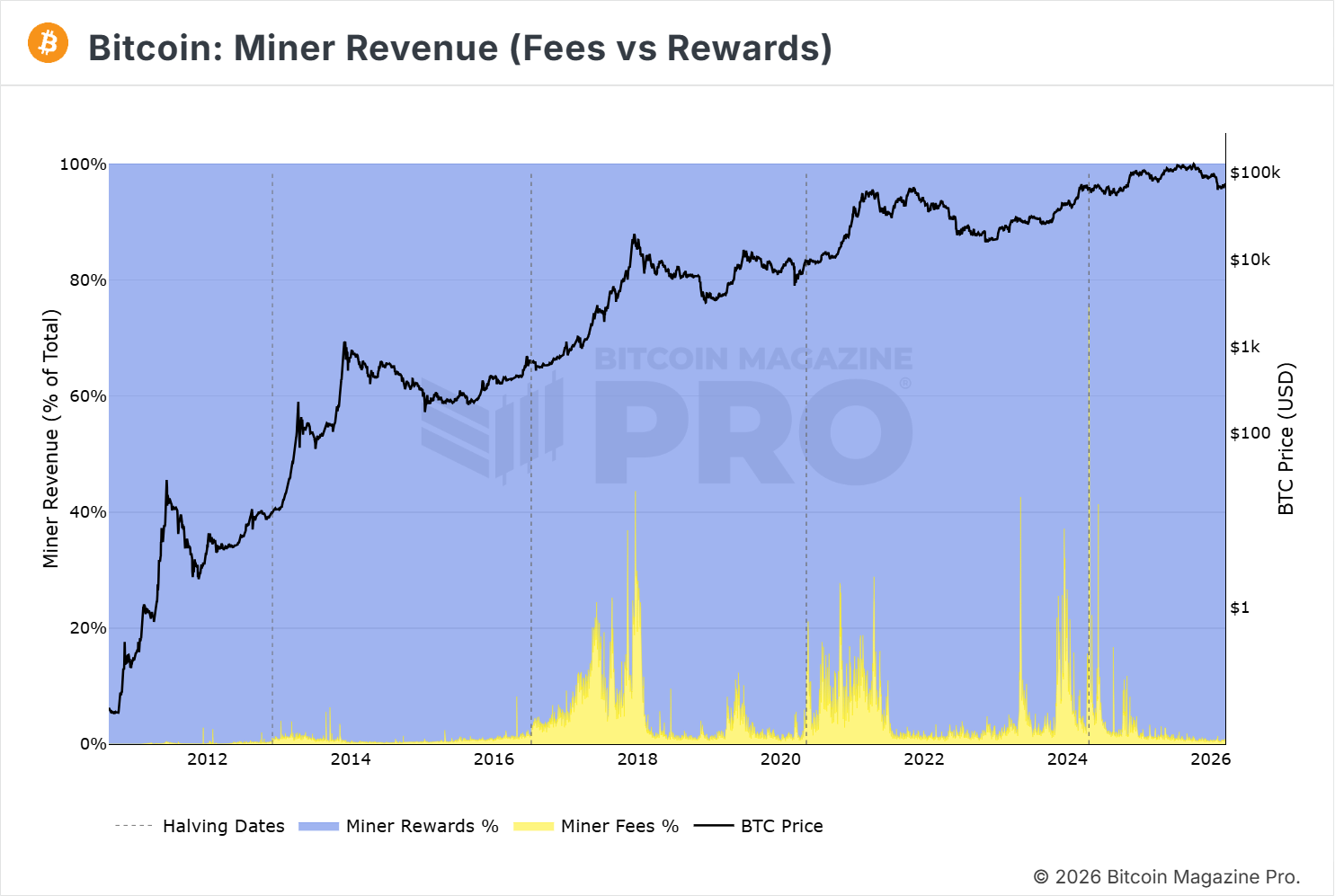
Source: Bitcoin Magazine Pro
Unit Economics of Mining
For investors evaluating mining exposure, the most important question is simple:
What does it cost to produce one Bitcoin?
Mining production cost varies widely depending on electricity prices, hardware efficiency, and scale. Industry estimates suggest the average global production cost is roughly ~$75,000 per BTC, depending on energy costs and hardware generation.
However, large industrial operators with access to low-cost energy may produce Bitcoin significantly cheaper. Typical electricity costs for competitive miners range from ~$0.04–$0.07 per kWh.
Electricity typically represents 60–75% of total operating costs for mining facilities.
Hardware payback periods also vary. Under favorable market conditions, new ASIC machines may recover their purchase cost in roughly 12–36 months, depending on BTC price and difficulty.
Because mining economics depend heavily on these inputs, profitability can change quickly as market conditions shift.
Hashrate Competition
Mining is a competitive process.
Each miner’s share of block rewards is determined by its share of total network hashrate. As more machines join the network, each miner’s probability of producing a block decreases unless they expand capacity.
Global hashrate has grown rapidly in recent years:
- 2020: ~120 EH/s
- 2022: ~250 EH/s
- 2024: ~600+ EH/s
- 2026: 950 EH/s
This growth reflects increasing institutional investment in mining infrastructure.
Rising hashrate increases network difficulty, which reduces the BTC produced per unit of computing power unless hardware efficiency improves.
As a result, mining margins depend not only on BTC price but also on the pace of competition.
Acquisition vs. Production
Direct investors acquire Bitcoin at market prices.
Miners produce Bitcoin through computational work.
Production economics depend on hardware efficiency (joules per terahash), electricity cost, machine uptime, and network difficulty adjustments.
When production costs fall below market prices, mining operations effectively generate BTC at a discount relative to the spot market.
Hardware Lifecycle and Obsolescence
Mining hardware has a limited competitive lifespan.
ASIC machines improve quickly, which means older hardware becomes less efficient relative to new generations.
Current leading machines operate at roughly: ~15 J/TH efficiency for the newest ASICs e.g., S21 Pro.
Previous generations operated closer to ~25–35+ J/TH e.g. S19
Future Trends (2026+): Upcoming ASIC miners are projected to break the 10 J/TH barrier e.g., S23.
Although the newest ASICs are approaching ~10 J/TH efficiency, the live Bitcoin network operates closer to ~16–25 J/TH because many miners still run previous-generation hardware
Because electricity is the highest cost, efficiency improvements dramatically affect competitiveness.
Typical ASIC lifecycle expectations:
- Peak competitiveness: 2–3 years
- Operational lifespan: 4–6 years, depending on power cost
After this point, machines may still operate but often become unprofitable unless electricity costs are extremely low.
This creates ongoing hardware reinvestment cycles for mining operators.
Liquidity and Exit Paths
Bitcoin itself is highly liquid and can be traded continuously on global exchanges.
Mining infrastructure operates differently.
ASIC machines, electrical systems, and data center capacity represent long-lived operational assets. Exiting a mining position typically involves one of several paths:
1. Hardware resale
ASICs are traded on secondary markets, though resale prices fluctuate significantly depending on market conditions and hardware generation.
Example pricing patterns:
- During bull markets, ASIC resale prices can exceed original purchase prices.
- During bear markets, resale prices may fall 50–80% below peak values depending on Bitcoin price, mining difficulty, and hardware generation.
2. Mining company equity
Some investors gain liquidity through publicly traded mining companies.
3. Infrastructure sales or mergers
Large mining facilities may be acquired by other operators or infrastructure investors.
Because of these dynamics, mining exposure generally requires a longer investment horizon compared with holding BTC directly.
Economies of Scale
Mining efficiency improves significantly with scale.
Large operators gain advantages through bulk purchasing discounts for ASIC hardware, long-term electricity contracts, purpose-built cooling infrastructure or centralized operational monitoring.
These efficiencies reduce the cost per terahash and improve competitiveness.
As a result, a growing share of global hashrate is controlled by industrial-scale operators.
Largest individual operators typically control ~2–6% of global hash rate, while the top 10 miners together account for 30-35%+ of the network.
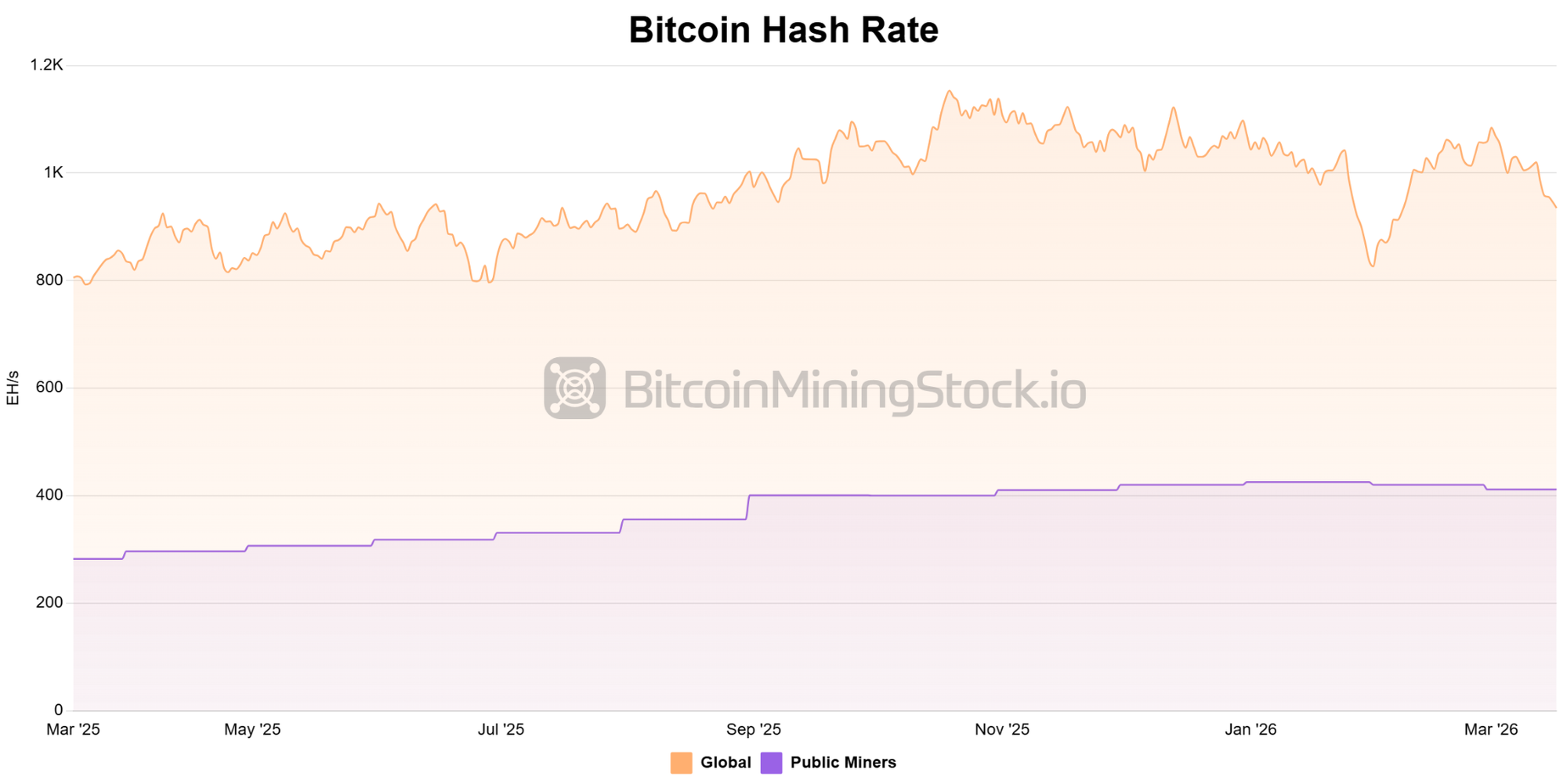
Source: BitcoinMiningStock.io
Portfolio Role: Mining vs Holding BTC
Mining and Bitcoin ownership play different roles within a portfolio.
Holding BTC provides direct exposure to price movements.
Mining introduces operational leverage to Bitcoin’s price.
When Bitcoin prices rise, mining revenue increases; previously unprofitable machines may become profitable, and hardware valuations often rise.
For this reason, mining exposure is often described as a leveraged proxy for Bitcoin’s price, although operational costs create downside risk if prices fall.
Some investors therefore treat mining as a complementary exposure rather than a replacement for holding BTC.
For example:
- BTC holdings provide liquidity and direct market exposure.
- mining exposure introduces infrastructure participation and production of BTC over time.
Understanding these differences helps investors determine how each strategy fits into a broader digital asset allocation.
Comparing the Strategies
Bitcoin ownership and Bitcoin mining both provide exposure to the same network, but through different mechanisms.
Ownership tracks the market value of BTC directly.
Mining converts infrastructure and energy into Bitcoin production, introducing operational variables alongside market exposure.
For investors evaluating different ways to participate in the Bitcoin ecosystem, these distinctions shape how risk, returns, and time horizons differ between strategies.
—
By Fakhul Miah – Managing Director, GoMining Institutional.
and Laila Effiong – Head of Content Marketing & Communications, GoMining.