

Macro Turmoil and Miners Reshaping Grid Management
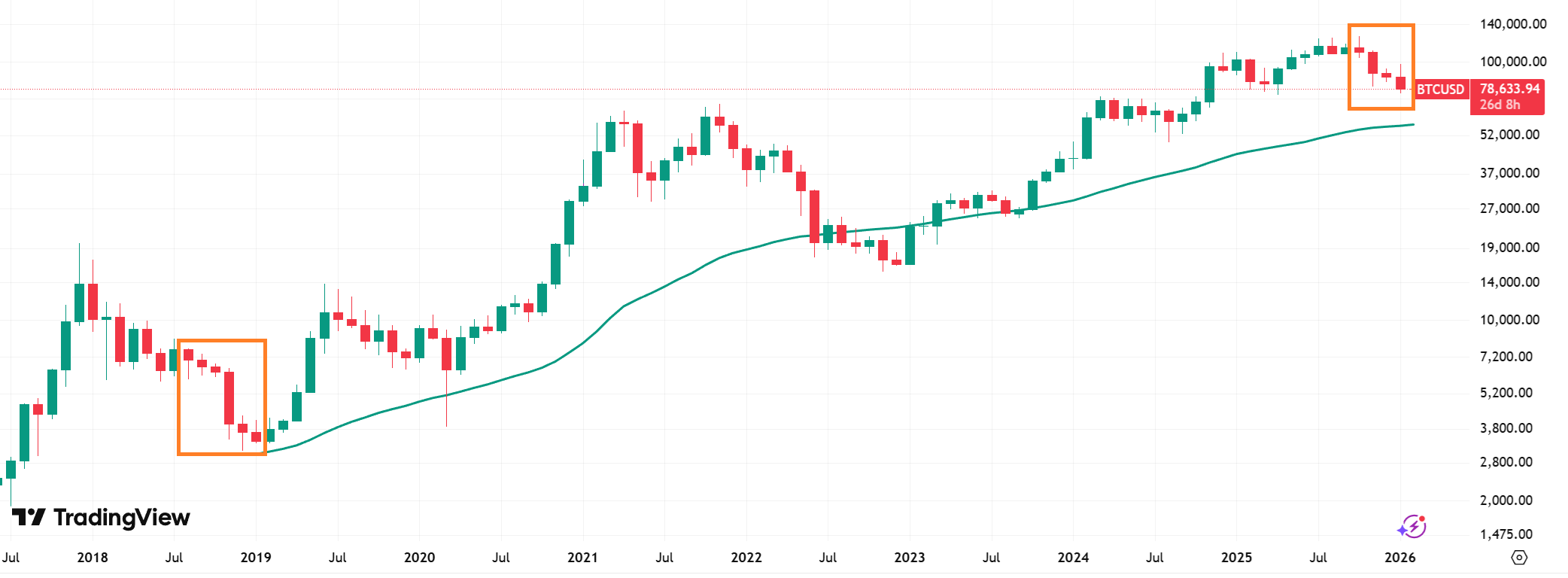
Bitcoin opened 2026 with momentum, but January quickly reminded markets that this cycle will be anything but smooth. A sharp pullback from nearly $98,000 to ~$76,000s has coincided with escalating trade tensions, and growing geopolitical uncertainty. From U.S. tariff threats to instability in global bond markets. In less than two weeks, Bitcoin shed around $20,000. January closed with a –10.1% return, marking the fourth consecutive red monthly close, a streak not seen since 2018.
Yet beneath the surface volatility, the structural story for Bitcoin is still strong. While price fluctuates, the largest corporate holder continues to accumulate aggressively, pension funds in Latin America are bringing Bitcoin into regulated retirement portfolios, and U.S. power markets are demonstrating how deeply Bitcoin mining is now embedded in grid-scale energy systems. This month’s update explores how macro turbulence, institutional adoption, and mining-sector consolidation are converging to define Bitcoin’s next phase.
TLDR;
BTC: $78,648 ▼ 10.1%
Open: $87,497 | Close: $78,648 | High: $97,953 | Low: $75,644
Hashprice $34.36/PH/day ▼ 10.5%
Open: $38.37/PH/day | Close: $34.36/PH/day | High: $41.89/PH/day | Low: $34.36/PH/day
Hashrate 882 EH/s ▼ 17.2%
Open: 1,065 EH/s | Close: 882 EH/s | High: 1,065 EH/s | Low: 882 EH/s
Volatility Rises as Macro Risk Continues into 2026
Bitcoin entered 2026 with strong momentum, rallying toward $98,000 in early January. Since January 15, price action has reversed sharply, with BTC falling as low as $76,000 and closing the month around the $78,500 level. In less than two weeks, Bitcoin shed around $20,000. January closed with a –10.1% return, marking the fourth consecutive red monthly close, a streak not seen since 2018. For now, the market remains under sustained pressure, with prices struggling to regain momentum against a backdrop of broader macro uncertainty. The key question is what needs to change for the trend to turn again.
Price remains highly sensitive to global macro volatility and geopolitical risk. This includes new U.S. tariff threats toward several European countries following tensions around Greenland. Later on President Donald Trump announced plans to impose 100% tariffs on Canadian imports, citing concerns over Canada’s alleged involvement in a trade agreement with China. In the aftermath, more than $100 million exited the crypto market, as risk assets broadly sold off. At the same time, a structural shift in Japanese sovereign debt markets has added to global financial instability, further weighing on risk assets and contributing to volatility.
Why Gold, Silver, and Bitcoin Sold Off Together
Gold and silver saw a sharp sell-off at the end of January, with prices falling over 15% and in one day wiping out around $3.4 trillion in notional value, roughly the size of the entire crypto market. The move was driven mainly by heavy profit-taking after a massive rally (gold up ~90% and silver ~270% over the past year) and amplified by excessive leverage in futures markets, where 50x–100x positions triggered cascading liquidations.
The shock quickly spread to crypto. Bitcoin dropped nearly 7%, falling below $82,000, while major altcoins declined 6–10%. According to CoinGlass, crypto liquidations hit $1.68 billion in 24 hours, mostly from long positions. At the same time, Bitcoin ETFs saw about $817 million in outflows, reinforcing a broader risk-off move that also hit equities and crypto-related stocks.
Strategy Doubles Down on Bitcoin Accumulation
Despite near-term price weakness, Strategy continues to aggressively accumulate Bitcoin. Between January 12 and January 19, 2026, the company purchased 22,305 BTC for approximately $2.13 billion, at an average price of $95,284 per BTC. In a separate disclosure, Strategy confirmed the acquisition of 2,932 BTC for $264.1 million at an average of $90,061 per BTC.
As of January 25, 2026, Strategy now holds approximately 712,647 BTC, acquired for roughly $54.2 billion, with an average cost basis near $76,000 per BTC (inclusive of fees). This pushes the firm well beyond the 700,000 BTC milestone, reinforcing its position as the world’s largest corporate Bitcoin holder.
BlackRock Turns Bitcoin Volatility Into Yield
BlackRock is expanding its Bitcoin ETF lineup with a new income-focused product built on its dominant iShares Bitcoin Trust (IBIT). The firm has filed with the SEC to launch the iShares Bitcoin Premium Income ETF, which would generate yield by running a covered-call strategy on bitcoin exposure held directly or via IBIT.
The fund would sell call options against its Bitcoin holdings, collecting option premiums and distributing them to investors as income. This strategy, widely used in equity income ETFs, trades upside potential for steady yield and has already been adopted by smaller crypto funds such as YBTC, BAGY, and BTCI.
What sets BlackRock apart is scale. IBIT is already the largest spot bitcoin ETF, with more than $68 billion in assets, and one of BlackRock’s top revenue drivers. By layering an options-based income strategy on top of IBIT, BlackRock is effectively offering institutions a way to turn Bitcoin’s volatility into cash flow.
Bitcoin Enters the Latin American Pension System
Colombia’s second-largest private pension and severance fund manager, AFP Protección, is launching a Bitcoin-linked investment fund for qualified clients, marking a major step in Bitcoin’s institutional adoption in Latin America. The product will be offered through a personalized advisory process, allowing eligible investors to allocate a portion of their portfolios to Bitcoin as a diversification tool, rather than replacing traditional holdings such as fixed income and equities.
Protección manages more than 220 trillion Colombian pesos (~$55 billion) for 8.5 million clients, making this one of the most significant pension-level Bitcoin integrations in the region. The firm follows Skandia, which introduced Bitcoin exposure in late 2025, meaning two of Colombia’s largest pension administrators now provide regulated access to BTC.
This move is happening alongside Colombia’s rollout of OECD-aligned crypto reporting rules, giving digital asset exposure a compliant, transparent framework. Together, these developments show how Bitcoin is moving beyond retail speculation and into long-term retirement portfolios, especially in emerging markets where currency risk and global capital access make Bitcoin an increasingly attractive hedge.
Record Hashrate Collapse as Winter Storm Hits U.S. Power Grids
In January a major winter storm swept across the U.S. Southeast, driving sustained sub-freezing temperatures and heavy stress on regional power grids. This matters for Bitcoin because roughly 38% of global hashrate is located in the United States, with a large share concentrated in Texas and Georgia, two states that were affected by the cold snap.
As heating demand surged, grid operators issued conservation alerts and power prices spiked. Bitcoin miners, one of the few fully interruptible, grid-scale industrial loads, responded by curtailing. The impact was immediately visible at the network level.
On Sunday the 25th, Bitcoin’s hashrate dropped from 1,160 EH/s to 706 EH/s, a decline of 454 EH/s. That is equivalent to nearly 2 million Antminer S21 Pro units, or roughly 6.8 GW of load, being powered down within hours. The more stable 7-day moving average also fell below 1 zetahash for the first time since mid-September 2025 and ended the month at now sits at 882 EH/s, down 246 EH/s (21.8%) from its all-time high of 1,128 EH/s set in October.
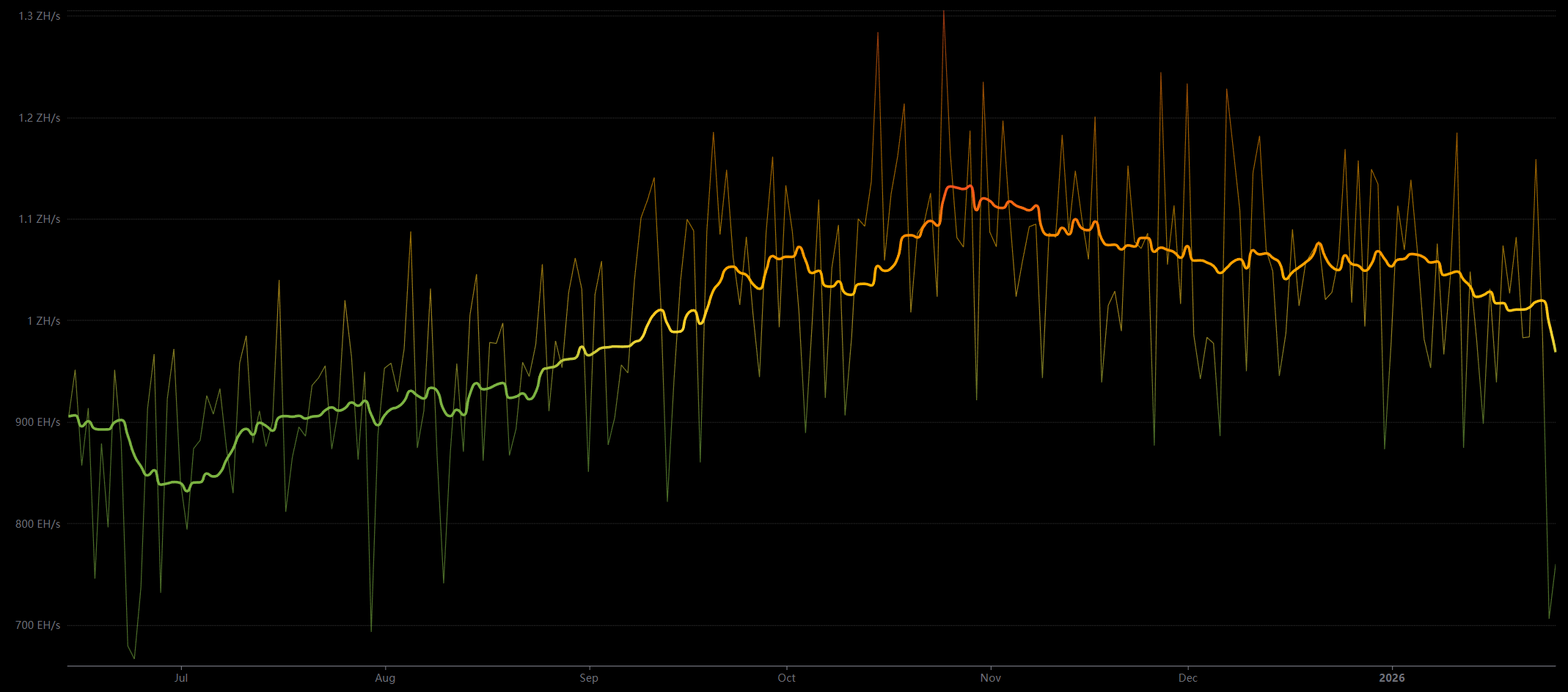
For context, the largest previous drawdown occurred during the summer 2025 curtailments, when the 7-DMA fell 148 EH/s (15.6%). Only the China mining ban remains the most extreme stress test in relative terms, with hashrate dropping from 181 EH/s to 86 EH/s, a 52% decline. But in terms of sheer volume of compute going offline in January is one for the history books and once again demonstrates how deeply Bitcoin mining has become integrated into grid-level demand response.
In Texas, this event also highlights how much the power system has evolved since the 2021 winter crisis. The rapid build-out of flexible loads primarily consisting of Bitcoin mining, has added a new stabilizing layer to the grid. When stress rises, miners shut down in seconds. When surplus returns, they come back just as fast. Bitcoin has effectively become a real-time balancing tool for modern power markets.
Falling Difficulty Shifts Economics Toward Strong Operators
Since Bitcoin’s network hashrate peaked in October, mining difficulty has been steadily declining, tracking the ongoing pullback in active hashpower. The final weeks of 2025 saw three consecutive downward adjustments, interrupted only by a negligible +0.04% uptick on December 25. That easing trend has continued into 2026, with two additional cuts of –1.2% and –3.28% already locked in.
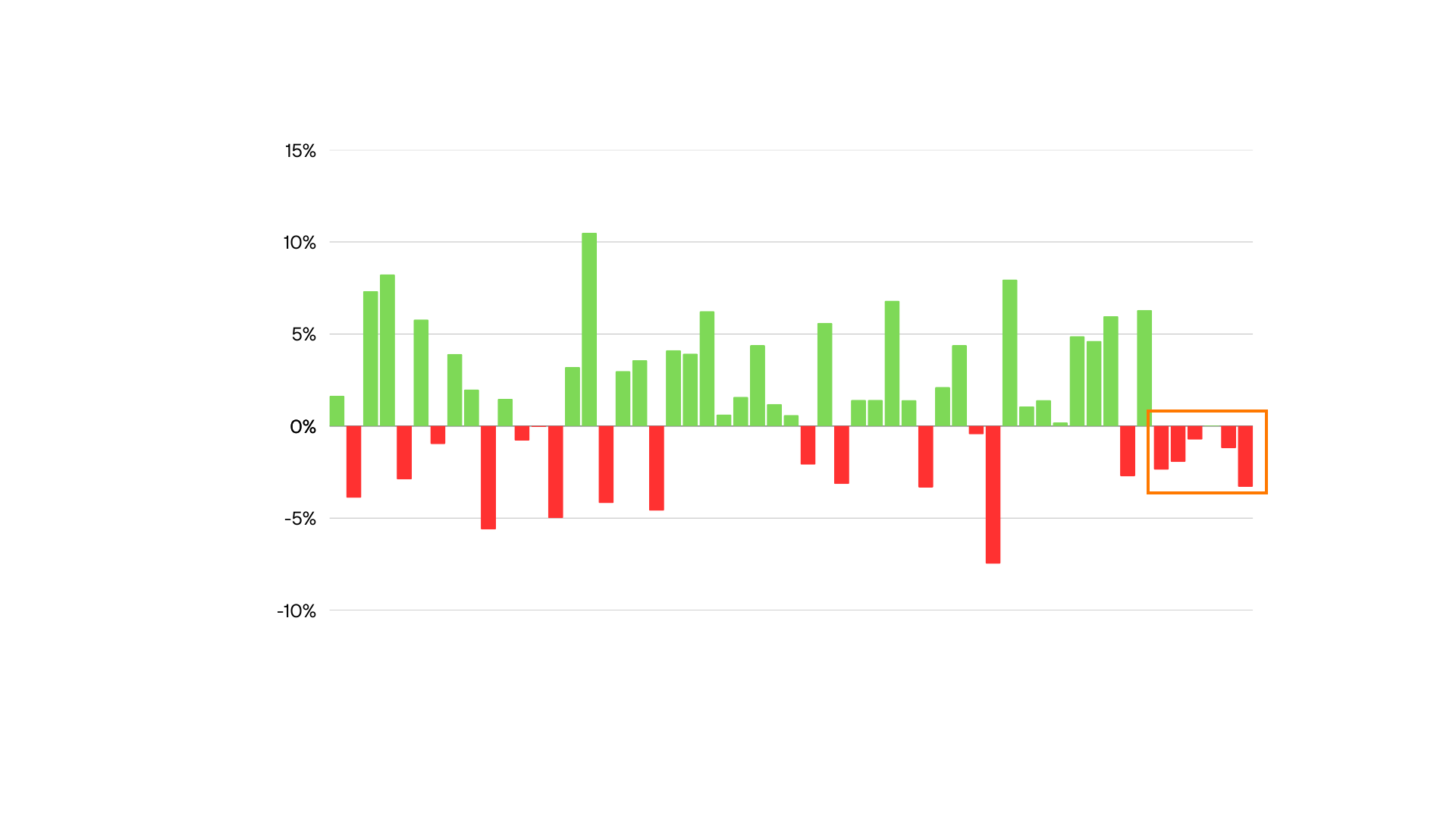
As a result, network difficulty has now fallen to 141.67 trillion, down from its all-time high of 155.97 trillion, a decline of 9.2% in just a few months.
This shift is highly constructive for miners who are able to stay online. As weaker, higher-cost operators shut down due to weather, power pricing, or balance-sheet stress, the remaining miners capture a larger share of block rewards. With fewer competing hashes chasing the same fixed Bitcoin issuance, each terahash online earns more BTC.
In practical terms, this means that well-capitalized, efficiently powered miners are now operating in a less competitive network. Historically, periods of falling difficulty following have been some of the most profitable windows for disciplined operators, rewarding those with stable power, strong uptime, and operational resilience.
Public Mining Power Is Rapidly Consolidating
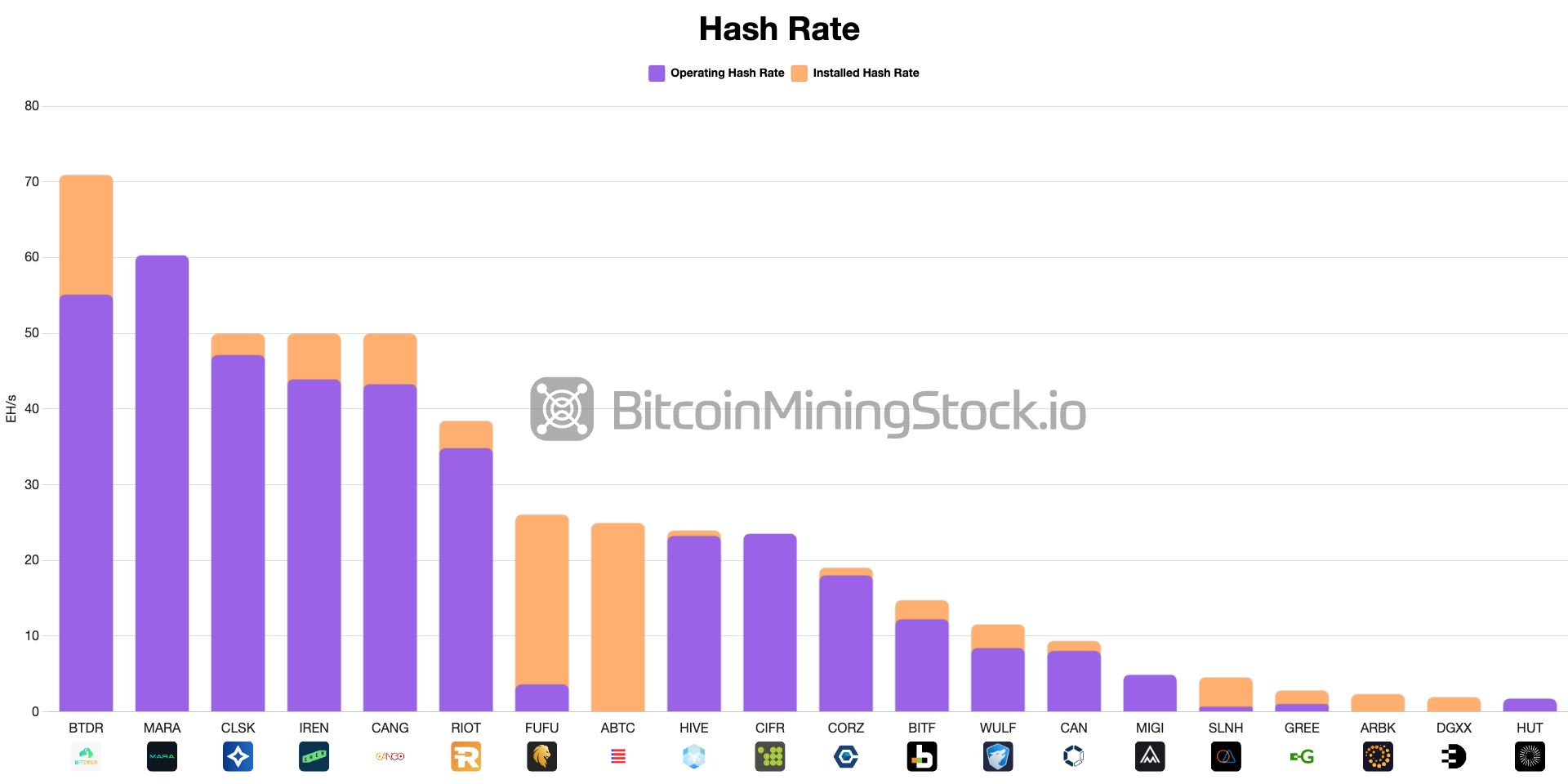
Bitdeer has now officially overtaken MARA Holdings to become the largest publicly listed Bitcoin miner by hashrate. As of December, the company reported 71 EH/s under management, spanning self-mining, cloud hashrate, and hosted capacity. While this is not a pure self-mining figure, it places Bitdeer at the top of the public-miner leaderboard and highlights the scale it now controls.
What stands out is the speed of this expansion. In 2025, Bitdeer grew its managed hashrate by +549% year-over-year, the fastest growth among major public miners. Just one month earlier, the company reported 60.3 EH/s, meaning it added over 10 EH/s in a single month, an acceleration rarely seen at this scale.
This growth is being driven by Bitdeer’s vertically integrated model. Its in-house SEALMINER platform allows the company to deploy capacity without relying on third-party ASIC suppliers, while older third-party machines are being retired and replaced with Bitdeer’s own hardware. This improves efficiency, control, and capital discipline, reinforcing Bitdeer’s long-term cost advantage.
At the same time, a second power center is emerging through financial engineering rather than infrastructure build-out. The NIP Group, parent of esports brand Ninjas in Pyjamas, is about to join the elite club of miners operating 10 EH/s or more. Instead of constructing sites or purchasing machines, NIP has used public equity to acquire already-energized hashrate, rapidly scaling its platform. After acquiring 3.11 EH/s in mid-2025 and another 8.19 EH/s in November, the company is targeting 11.3 EH/s, with 9.66 EH/s already online as of mid-January 2026.
This makes NIP one of the largest Bitcoin miners globally and the largest by disclosed capacity in the Middle East and North Africa. More importantly, the counterparties behind these transactions are all closely tied to Antalpha, Bitmain’s financing and treasury arm. The same network was used to scale Cango into a roughly 50 EH/s proprietary miner, effectively creating a Bitmain-aligned public mining bloc that now controls more than 60 EH/s of global hashrate.
Together, these developments signal a new phase of consolidation in public Bitcoin mining, where vertically integrated manufacturers and capital-driven roll-ups are emerging as the dominant forces shaping the network.
Nico Smid – Research Analyst at GoMining Institutional