
In this article, we will explain what a hash rate is in Proof-of-Work, why comparing the hash rates of different networks is misleading, and how to make a correct comparison taking into account complexity and energy costs in order to calculate profitability.
What is a hashrate and why is it important?
Hash rate is the speed at which cryptographic calculations are performed to find a valid block. The higher the total hash rate of the network, the more expensive and difficult it is to carry out a 51% attack, so hash rate is directly related to the level of security. For miners, this indicator determines their share of the reward: the higher your share of the network's hash rate, the greater the expected reward, adjusted for electricity costs and equipment efficiency. There are also metric prefixes for "hashes per second" (hashes per second):
- H/s: hashes per second
- kH/s: kilo hashes per second
- MH/s: megahashes per second
- GH/s: gigahashes per second
- TH/s: terahashes per second
They are used as units of measurement for computing power to display the hash rate (so that the number is readable), regardless of whether it is ASIC, GPU, or CPU.
Why direct comparison is incorrect
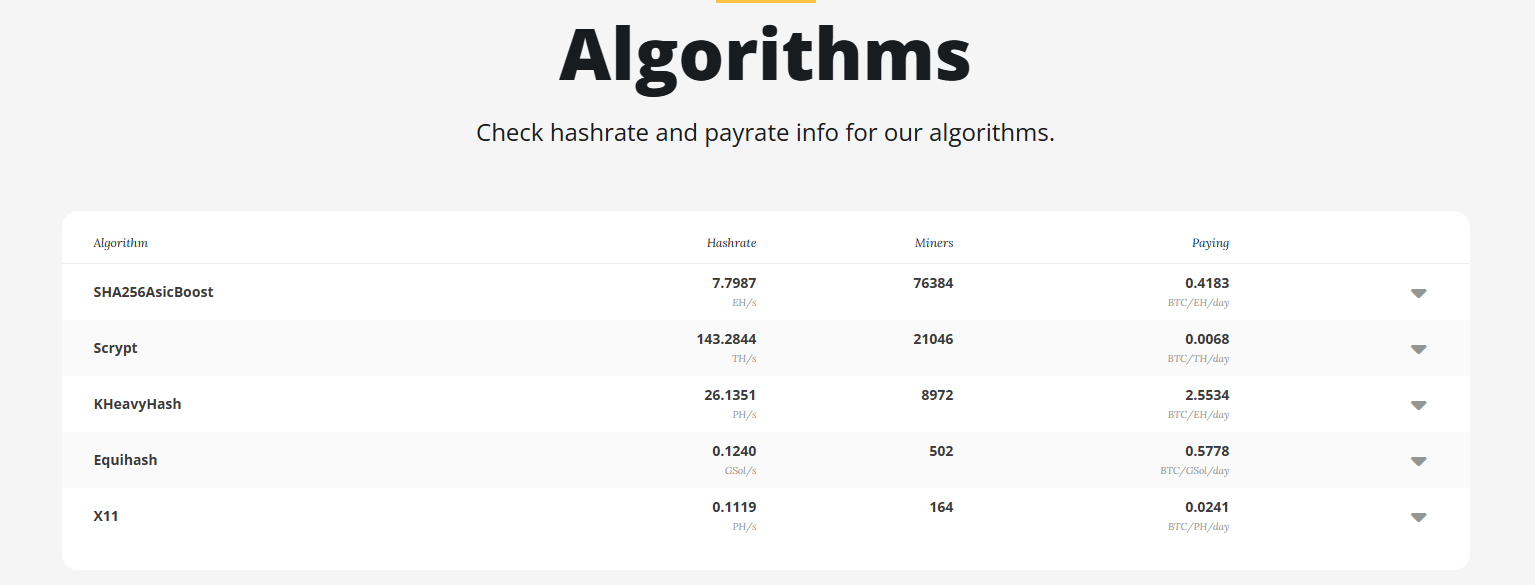
The units of measurement are different, and these numbers are not comparable without context and an understanding of which blockchain is being discussed. "Comparing TH/s and H/s without normalizing for complexity and energy efficiency is like comparing kilometers and liters: the numbers look good, but they don't make sense" — article on hash rate normalization habr.com
Source: nicehash.com
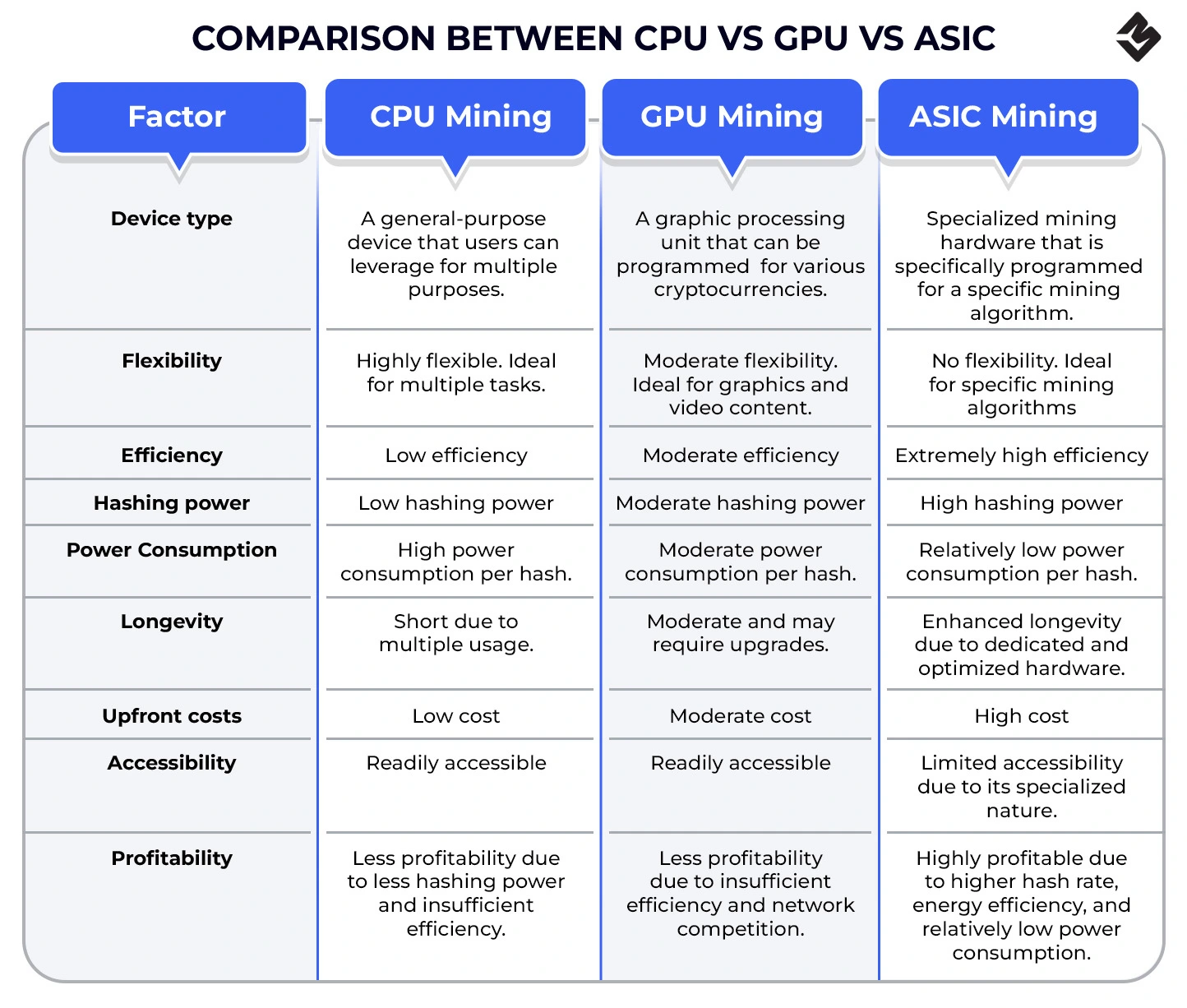
Algorithms place different loads on memory and computing power, and equipment (ASIC, GPU, CPU) has different performance and energy consumption profiles. Without normalization for complexity and energy, the comparison becomes a numbers game that reflects neither the current complexity of the network nor the real profitability of mining.
Source: cryptominerbros.com
Methodology for correct comparison
The comparison begins with normalization: we take the "native" hash rate of the network, take into account the current complexity (how much work is required per block), add the energy profile (joules per megahash, watts per terahash), and convert everything into understandable metrics. We evaluate profitability as a function of the block reward, coin price, and hash rate share, but we always adjust for difficulty, electricity rates, and equipment efficiency. The result is a real comparison not of hash rate numbers, but of conditions: labor costs, energy, equipment power, and risks.
PoW algorithms and their features
SHA-256 (Bitcoin, Bitcoin Cash)
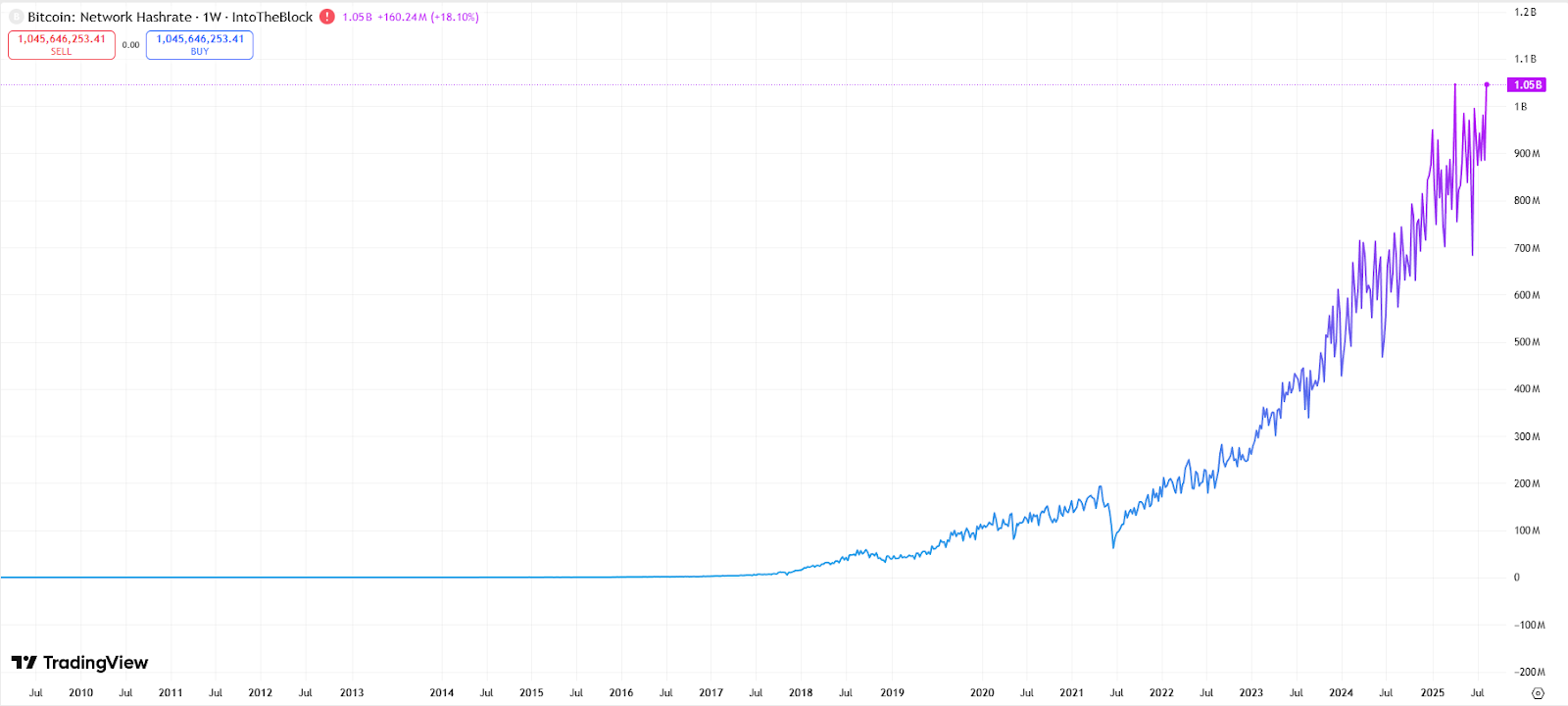
An ASIC-oriented algorithm measured in terahashes. It is characterized by high capital intensity and a mature equipment market. Its strength is high resistance to attacks due to the concentration of specialized power; its weakness is a high entry threshold and dependence on energy tariffs.
Source: tradingview.com
"The total network hash rate is a direct indicator of the cost of a 51% attack: the higher the power, the more expensive it is to organize," according to Glassnode's analytical review "Bitcoin and network security 2025."
Scrypt (Litecoin, Dogecoin via merged mining)
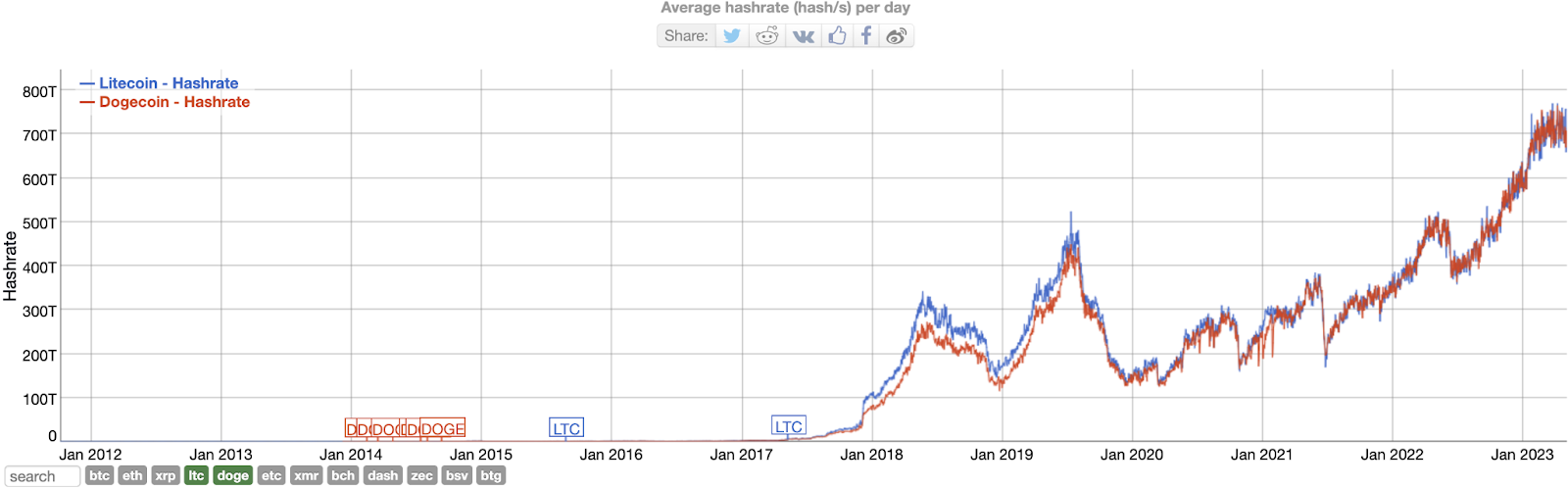
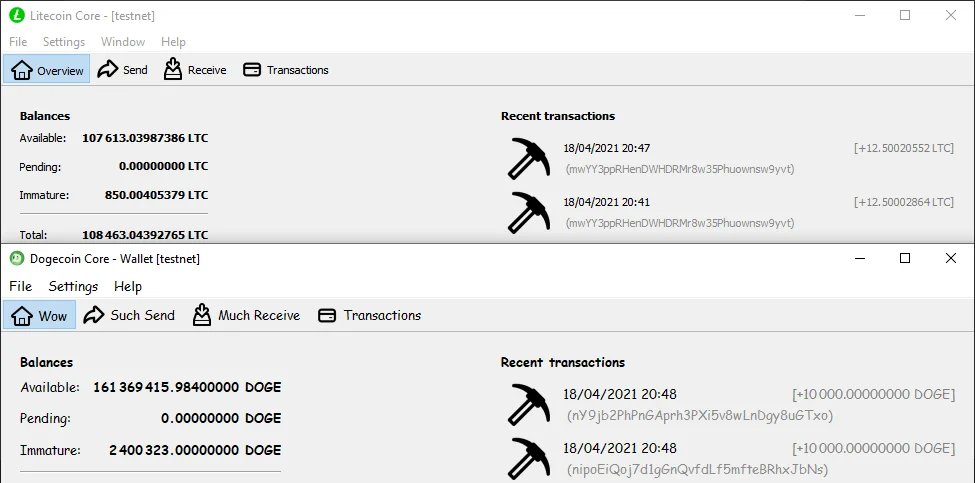
Litecoin runs on the Scrypt algorithm and is mined primarily on ASIC devices, with performance measured in gigahashes. Its key feature is merged mining: the hashrate directed at Litecoin simultaneously strengthens the security of the Dogecoin network.
Source: viabtc.net
This approach does not require separate equipment for the "daughter" network and allows miners to receive rewards in two coins at once — Litecoin and Dogecoin. This is a systematic way to increase the stability of the ecosystem and an additional source of income for participants.
Source: reddit.com
KHeavyHash (Kaspa)
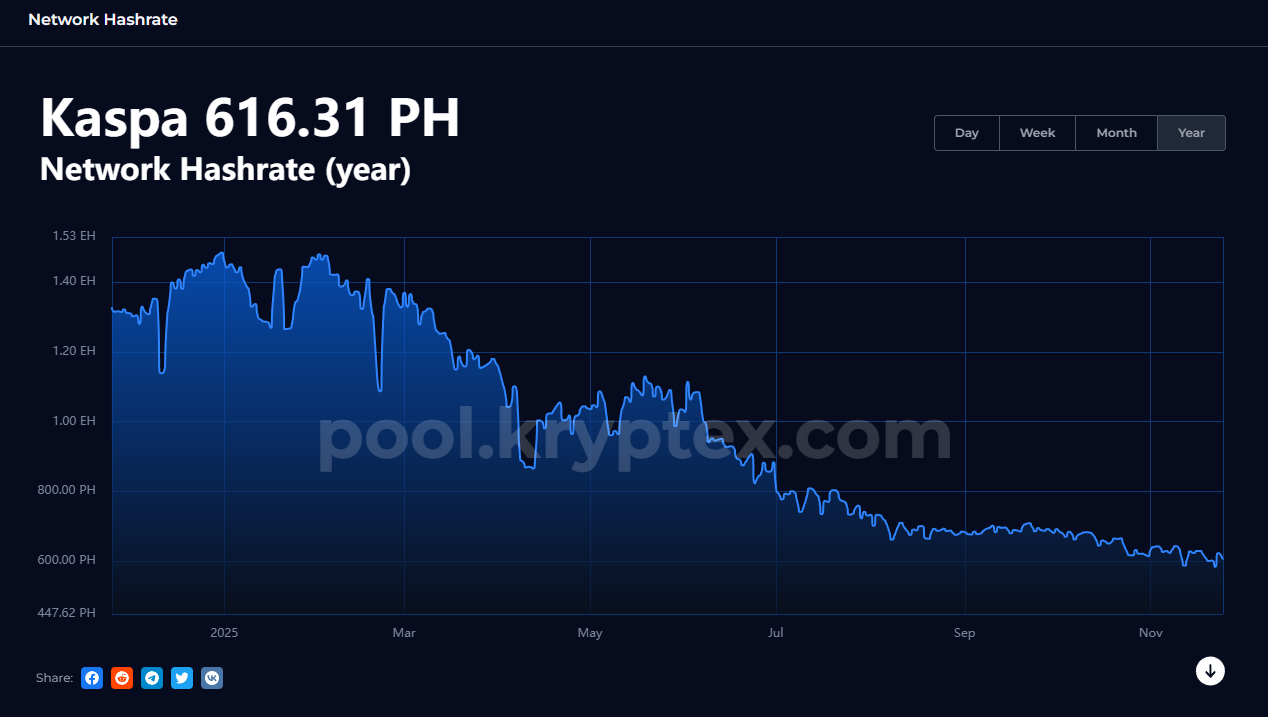
GPU-based algorithm, measured in petahashes. Optimized for throughput and latency, scales well on modern graphics cards. Comparison with SHA-256 requires consideration of complexity and energy profile: "more hashes" does not mean "more income" until the correct profitability calculation has been performed.
Source: kryptex.com
RandomX (Monero)
A CPU-oriented algorithm for the anonymous cryptocurrency XMR. Reduces the advantage of specialized hardware, supporting a broad base of miners. Focus on decentralization: security is assessed not only in terms of "raw" power, but also in terms of the distribution of this power and the cost of mass access to CPU resources."RandomX has brought back an important focus on mining decentralization: Monero's security is measured not only by absolute hash rate, but also by the distribution of CPU resources among a multitude of nodes" — publication by the Monero team, getmonero.org
Ethash / Etchash (Ethereum Classic)
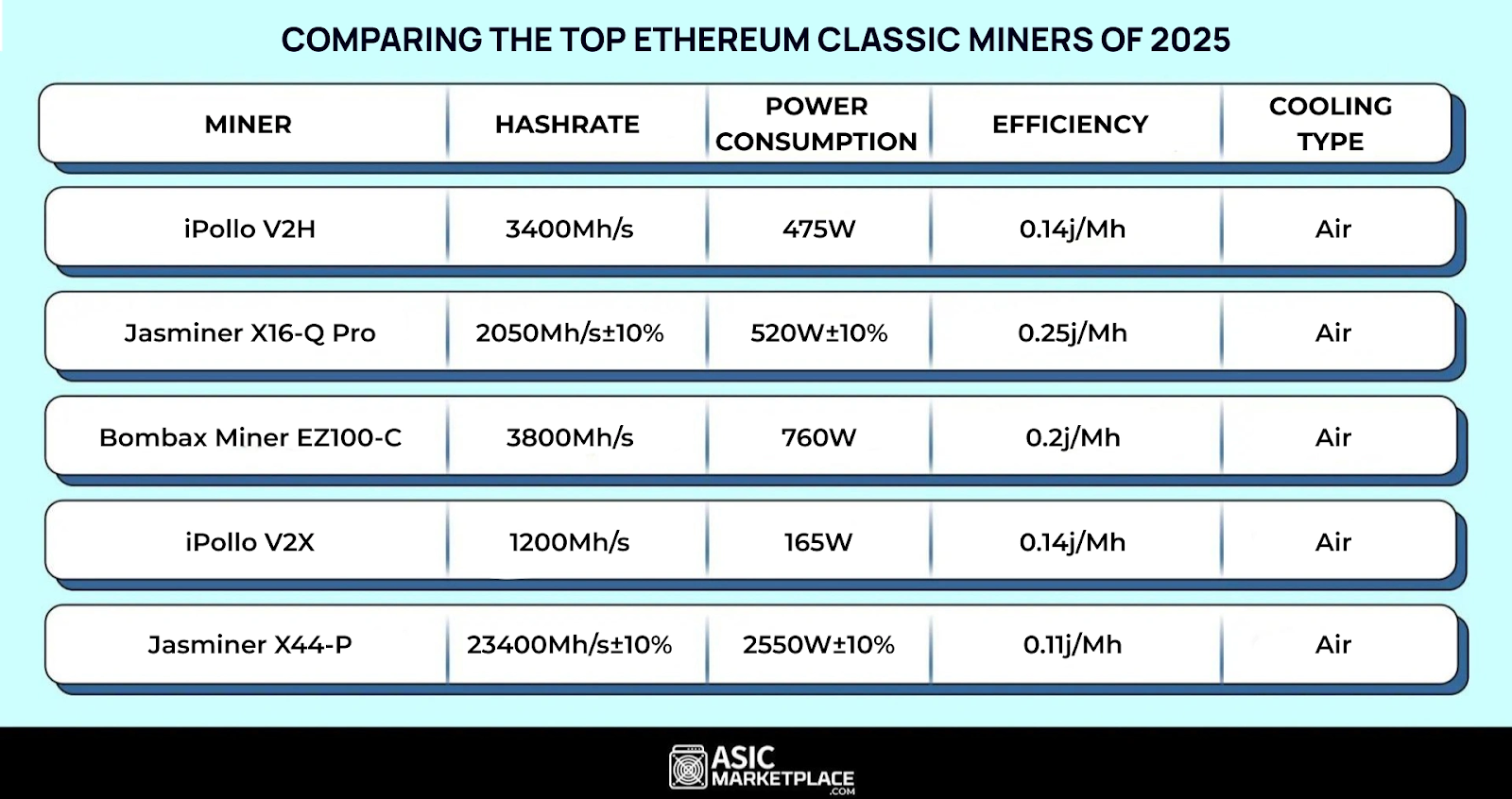
Etchash is a modified Ethash used in Ethereum Classic. It is a memory-dependent GPU algorithm where performance is determined by the bandwidth and latency of video memory; DAG parameters affect hardware compatibility and efficiency. Etchash is adapted to extend the life cycle of weak GPUs and keep mining accessible to a wide audience of miners.
Source: asicmarketplace.com
Practical resources for verification
- NiceHash — profitability calculator and hardware efficiency assessment.
- Blockchain explorers — history of complexity, hashrate, and block rewards.
- Hashrate Index — mining market analytics: hashrate cost, ASIC device profitability, difficulty dynamics.
To calculate profitability and verify hashrate, use specialized algorithm calculators, difficulty aggregators, and blockchain explorers. Look at hashrate and difficulty charts, check reward parameters, and normalize indicators between algorithms in terms of energy and difficulty. Always cross-check data from multiple sources — a single graph rarely gives the full picture.
Mining with GoMining
If you want a simple and straightforward way to earn income from computing power without having to deal with coins on a daily basis, GoMining offers capacity rental and yield management. The built-in calculator compares the expected mining profit with the risks of holding tokens and suggests the optimal strategy. Unlike buying equipment yourself, where there is always the risk of not recouping your investment, encountering complex setup and connection to the blockchain or pool, as well as high electricity costs, GoMining eliminates these problems: you rent ready-made power and earn income without technical and operational difficulties.
Subscribe and get access to the GoMining course on crypto and Bitcoin, which is still free.
Telegram | Discord | Twitter (X) | Medium | Instagram
FAQ
- What is hash rate in blockchain? It is the total computing power that miners use to solve cryptographic problems and confirm transactions. It shows how many hashes (solutions) the equipment can perform in one second. The higher the hashrate, the faster the transaction processing speed and the more secure the network, as it is more difficult to carry out an attack.
- How does the hash rate affect network security? The higher the total hash rate, the more expensive it is to carry out a 51% attack, which means the network is more stable.
- How is mining energy efficiency measured? Through J/MH or W/TH indicators — how much energy is required to perform a certain amount of calculations.
- What is special about Litecoin and Dogecoin merged mining? The same computational work protects both networks simultaneously, increasing Dogecoin's stability without separate equipment.
- Why does Monero use RandomX? The algorithm is CPU-oriented to reduce the advantage of ASICs and support mining decentralization.
- How do you calculate mining profitability? Revenue = block reward × coin price × miner's share of the hash rate, minus electricity and equipment costs.
- What can be used to mine different algorithms? SHA-256 requires specialized ASIC devices, Scrypt also works on ASIC/FPGA, and RandomX on regular CPUs. For those who do not want to buy equipment, there is a computing power rental service called GoMining, where you can earn income without physically purchasing a miner.
- How often is the difficulty recalculated in PoW networks? In Bitcoin, the difficulty is adjusted every 2016 blocks (approximately every two weeks), in other networks — more often, sometimes every few minutes or hours. This allows the network to adapt to changes in the total power of miners.
NFA, DYOR.
The cryptocurrency market operates 24/7/365 without interruptions. Before investing, always do your own research and evaluate risks. Nothing from the aforementioned in this article constitutes financial advice or investment recommendation. Content provided "as is", all claims are verified with third parties and relevant in-house and external experts. Use of this content for AI training purposes is strictly prohibited.
Complete guide "How to compare the hash rates of different blockchains" — what is hash rate in PoW, why direct comparison is misleading, normalization methodology through complexity and energy efficiency, overview of algorithms (SHA‑256, Scrypt, RandomX, Etchash), real-world examples for BTC, LTC/Doge, and Monero, practical resources for verification, and conclusions about network security and profitability.