Weekly Low — Lowest price point in Crypto Definition

Weekly Low (PWL) — this is the lowest price that an instrument has fallen to over the last week.
It is calculated automatically based on candlesticks. The system reviews price dynamics over 7 days and marks the minimum level to which the asset has fallen.
Weekly Low is not a theoretical indicator, but pure statistics based on real market data.
How the weekly low is formed
Often, Weekly Low is based on one of the following scenarios:
1. Smooth decline. The asset slowly declined until it found demand. Such a Weekly Low acts as normal support.
2. A sharp downward impulse. The price falls sharply, knocks out stops, and then returns. Such a low often becomes a turning point.
3. A major player breaks through the level. Large traders may deliberately lower the price below previous lows to gather liquidity and only then reverse the movement. This explains why many false breakouts occur around the Weekly Low.
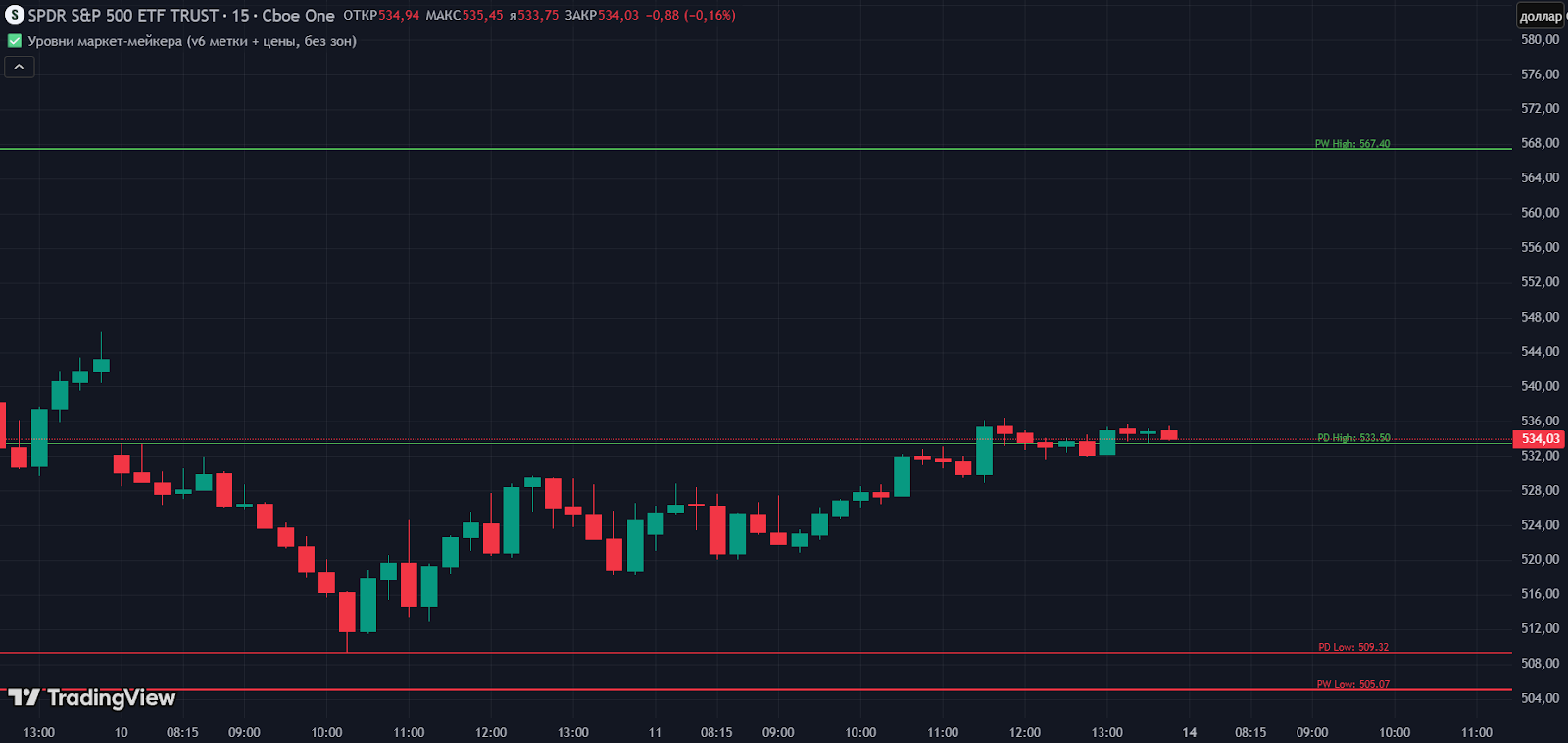
Source: Tradingview.com
Why is Weekly Low considered a key market benchmark?
1. It reflects the real demand zone. Most technical levels depend on how they are constructed. One trader sees a trend line at an angle, another sees it differently, some rely on figures, and others on their own visual patterns.
Weekly Low stands out from the rest because it is formed automatically and is based solely on actual data for the week.
2. It shows the moment of real weakness of buyers. An update of Weekly Low always signals that market support has not withstood the pressure.3. It is used by all categories of traders and systems. Weekly Low is so widely used that it has become a kind of common language between different types of participants:
— Intraday traders and scalpers consider the weekly low as a benchmark for short trades and finding entry points.
— Medium-term traders compare the current Weekly Low with previous ones to assess the direction and strength of the trend.
— Large players and funds pay attention to such levels when collecting liquidity and forming positions.
— Algorithmic strategies include Weekly Low in their rules for triggering and filtering signals.
No serious analytical model ignores weekly lows because they provide clear, unbiased information about price behavior.
Market psychology around the weekly low
1. Reaction of novice traders. Beginners often perceive a break of the weekly low as a signal to quickly exit their position, fearing a further decline in price. This behavior creates additional pressure on the market, which more experienced participants can take advantage of.
2. Tactics of large players and funds. Experienced traders see the Weekly Low as an opportunity to carefully collect liquidity. Sometimes the price is deliberately lowered below the low to trigger the stop losses of less prepared participants, after which the movement reverses in the opposite direction. Such situations often lead to false breakouts.
3. Impact on emotions and decision-making. The weekly low creates important psychological benchmarks: sellers experience fear, while buyers experience hope. Understanding these reactions allows traders to act more judiciously, avoiding hasty decisions influenced by panic.
4. General market atmosphere. As the price approaches the weekly low, participants focus their attention on the balance of supply and demand. By observing the market's reaction to the PWL, you can assess the strength of bearish and bullish sentiment and predict likely reversal points or trend continuations.
Weekly Low as a risk management tool
1. Setting stop losses. One of the most common methods is to place a stop loss just below the Weekly Low.
The idea is simple: if the price breaks through the weekly low, it means that support has been broken and the risk of holding the position is too high.
This approach allows you to protect your capital and exit the trade before a sharp decline begins.
2. Determining the level of risk and profit potential. Weekly Low helps to calculate the risk/reward ratio. The trader sees the lower limit of the market and can predict how likely a downward movement is. This makes it possible to correctly determine the size of the position and the exit point.
3. Minimizing emotional decisions. When risk levels are defined in advance, it is easier to control emotions. Weekly Low acts as an objective boundary that shows where the trade scenario ceases to be relevant, which means that the trader makes a decision based on facts rather than panic.
4. Use in combination with other levels. Paired with Weekly High or local support, Weekly Low creates an accurate risk map. This helps to set stop losses correctly, predict pullback zones, and understand in advance where the price may give a signal to exit the position.
In conclusion
The weekly low is an important benchmark for understanding the market. It shows the level at which the price could stop falling and helps to identify areas of liquidity accumulation.
By taking PWL into account in their analysis, traders can plan their trades more accurately, reduce risks, and build strategies based on actual price movements.
Subscribe and get access to the GoMining course on cryptocurrency and Bitcoin, which is still free: https://academy.gomining.com/courses/bitcoin-and-mining
January 5, 2026